
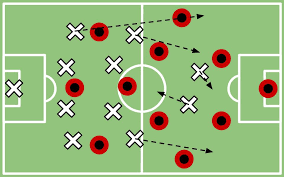
The Thai title centers on a clear objective: use the tactical “shape” of Serie A coaches in the 2021/2022 season to help decide which side to back before a match. Instead of starting from league position or headlines, it asks how game models—pressing height, formations, build-up patterns—translate into match-ups that favour one team’s strengths over another’s weaknesses. When you pair those tactical fingerprints with basic stats and prices, you move from guessing winners to constructing structured, pre‑match arguments.
Why Coaching Tactics Matter for Side Selection
In 2021/22, Serie A featured a mix of coaches with distinct philosophies: high-intensity pressers, possession strategists, low-block pragmatists and hybrid models that shifted between phases. These choices dictated where games were played on the pitch, which zones were overloaded and whether matches became open or cagey, all of which directly affected goal patterns and, ultimately, results. A coach’s system is therefore not background noise; it is the engine that generates the shot and xG profile you end up betting on.
Midseason reviews of Serie A noted that coaching changes and tactical tweaks had tangible impacts on pressing intensity and territorial dominance, with some clubs taking a more proactive stance and others retreating into conservative shapes. For bettors, ignoring these shifts means pricing teams based on stale stereotypes—“defensive Italian football” or “this club always attacks”—rather than on the live version of the side that actually shows up on the pitch.
How 2021/22 Serie A Tactical Landscape Looked
Analysts covering 2021/22 described a league where the title race hinged not only on talent but on the tactical detail of coaches like Pioli, Inzaghi and Spalletti. AC Milan combined compact defensive phases with sharp transitions and structured wide attacks; Inter, under Simone Inzaghi, continued with a back‑three framework emphasising wing‑backs and central overloads; Napoli experimented with a 2‑3‑5 attacking shape in certain phases, using inverted full-backs and high positional play to break presses. These systems produced predictably different patterns in shot volume, territory, and game state volatility.
Tactical match analyses from that season—Torino vs Inter, Napoli vs Juventus and others—highlight how individual coaches approached specific opponents. Ivan Jurić’s Torino pressed aggressively and set traps in wide areas, forcing a usually dominant Inter side into a tighter game where its wing‑back dynamics were disrupted. Spalletti’s tweaks against Juventus showed how inverting a full-back inside and pushing the opposite full-back high could stress a 4‑4‑2 defensive structure, leading to territorial control even against a traditionally strong club. These examples show that knowing “the coach’s idea” is often more informative for betting than simply knowing the squad list.
Key Tactical Axes That Shape Bet Decisions
When you scan Serie A 2021/22 from a betting perspective, several tactical axes consistently influenced match dynamics. One is pressing height: teams that press high and often force opponents into mistakes and rushed long balls, inducing turnovers in dangerous zones; teams that drop off into mid or low blocks concede more controlled territory but may limit big chances. Another axis is formation and structure, particularly back‑three vs back‑four setups, which define how wide areas are contested and how easily a team can double up on opponents’ wingers or full‑backs.
Possession strategy forms a third axis. Some coaches structured possession to create 2‑3‑5 or 3‑2‑5 shapes in attack, filling all five lanes across the frontline and using midfield “rest defence” to control counters. Others preferred more direct, vertical play, accepting lower possession in exchange for faster, higher‑xG transitions once the ball was won. Each approach leads to distinct profiles in xG for and against, corners, and card risk, all of which feed into side, total and prop markets.
Mechanisms: How Tactics Turn into Edges
Mechanically, a pressing coach who insists on high defensive lines and intense pressure will typically increase total shot counts and xG at both ends: winning the ball high creates good chances, but space left behind allows opponents to threaten more when the press is broken. A low‑block coach does the opposite, compressing central space and often driving opponents into low‑quality wide shots at the cost of needing counterattacking precision to generate chances of their own.
In practice, that means the same fixture can look very different depending on the tactical match-up. A high‑press team facing a build-up side that struggles under pressure may dominate shots and xG, justifying shorter prices on the favourite; the same pressing team against a direct, vertical opponent might produce a chaotic game where variance increases, weakening confidence in a short‑priced favourite. Reading the coach’s tactical plan, rather than only the name of the club, lets you distinguish those scenarios before kickoff.
A Table for Profiling Coaches from a Betting Angle
You can make these ideas actionable by profiling coaches along a few dimensions that matter for betting. Tactical analysis sites and coaching features summarise how specific managers set up their sides, including pressing intensity, typical formations and preferred attacking routes. Turning that into a table helps you quickly map tactical traits onto likely match dynamics.
| Tactical Dimension | Coach / Team Traits Seen in 2021/22 Context | Betting Implication |
| Pressing intensity | High pressing (e.g. aggressive Torino, Atalanta archetype) | More high‑event games; value may lie in overs or fading tired legs late |
| Defensive block height | Mid/low block (pragmatic coaches, reactive sides) | Lower chance volume; under and +handicap for solid underdogs become more attractive |
| Primary formation | Back three with wing‑backs vs back four with narrow wingers | Wide overloads vs overloaded half‑spaces affect where chances emerge |
| Possession approach | Structured build-up vs direct vertical play | Build-up sides more sensitive to pressing; direct sides more variance‑prone |
| In‑game flexibility | Willingness to switch shape mid‑match | More complex in‑play read; prematch edges may shrink |
You don’t need exact labels for every coach to use this kind of framework. The key is to watch or read enough tactical breakdowns to place a team into one of these rows, then ask how that profile interacts with its opponent’s. For instance, a structured build-up side facing an intense pressing team may be more fragile than its xG and league position alone indicate, especially away from home in 2021/22‑type conditions.
Integrating UFABET into a Tactics‑First Pre‑Match Workflow
Once you’ve turned tactical profiles into expectations about how a match is likely to unfold, you still need to convert those expectations into concrete, price‑sensitive decisions. In situations where your read of two Serie A coaches suggests a specific game script—for example, a tight territorial battle between two cautious mid‑block sides, or an end‑to‑end contest between pressing systems—the question becomes which markets best express that script and where the odds leave room for edge. Under those circumstances, a multi‑market betting platform such as ufabet becomes relevant because it lets you anchor your side selection not just in 1X2 prices but also in related positions: taking an underdog on a handicap when a favourite’s tactical plan is likely to be neutralised, pairing a side bet with totals that fit the expected tempo, or even avoiding a side entirely when tactical strengths clash evenly, and redirecting analysis toward alternative markets instead. The tactical read remains central; the platform simply provides a menu of ways to reflect that read in your staking rather than forcing you into a binary win/lose bet that may only partially match your edge.
Using Lists to Turn Tactical Reads into Side Decisions
To move from high‑level tactical understanding to specific side choices in a 2021/22‑type season, a practical checklist helps. Strategy guides on stats‑driven betting recommend combining qualitative observation with quantitative indicators instead of relying solely on one or the other. For a Serie A match, you might structure your pre‑match thinking like this:
- Identify each coach’s base shape (e.g. 4‑2‑3‑1, 3‑5‑2) and typical attacking pattern (possession‑heavy, wide overloads, or transitions) from recent games and analyses.
- Assess pressing and block height: which team tends to press high, which sits off, and how comfortable each is playing under pressure or defending deep.
- Cross‑check these traits with recent stats—xG for and against, shot locations, possession share—to confirm that the tactical identity you see matches the underlying numbers.
- Consider match‑specific factors: injuries, suspensions, fatigue and stakes (title race, relegation, European qualification), all of which can push a coach toward more conservative or aggressive shapes.
- Map the likely game script: who controls territory, who has space in behind, whether either team’s usual strengths are being directly targeted by the opponent’s system.
- Compare your script‑based probabilities with the available odds on sides and handicaps; only back a side when the tactical and statistical picture justifies a gap between your estimates and the market.
Using this list prevents you from focusing on formation diagrams alone. It forces you to link “coach does X” to “therefore match will probably look like Y,” and then to “so side Z at this price is misvalued.” Over time, that logical chain makes you less vulnerable to recency bias or overreactions to single standout performances.
How “casino online” Context Shapes Tactics‑Aware Betting
Even with strong tactical reads, you can only act within the constraints of the digital environment you use. Many modern bettors operate inside casino online ecosystems where football markets sit alongside other games, and where the depth of available markets varies. When your analysis of Serie A 2021/22‑style coaching patterns points to specific tactical advantages—say, one coach’s structure consistently suffocating another’s favourite build-up routes—your ability to express that view depends on whether the environment offers targeted markets like alternative handicaps, first‑half lines or team‑specific totals that match your game script.
Guides on using advanced stats for football betting emphasise that combining tactical insight with xG and possession data becomes significantly more powerful when coupled with the ability to choose precisely where to take risk. In leaner environments, you may be forced into coarse bets that don’t fully match the nuance of your tactical edge; in richer ones, you can tilt modestly toward a side you think is structurally favoured without overexposing yourself to scenarios where the script flips due to red cards or unexpected tactical shifts.
Where Tactical Reads Can Fail
Relying on tactical analysis to choose sides has limits. Coaches adapt—especially in a long campaign like 2021/22—and what started as a clear identity may evolve in response to injuries, form dips or opponent-specific game plans. Tactical previews sometimes overemphasise last week’s tweak without recognising whether it was a one‑off or a lasting change. If you base side selection entirely on a snapshot view, you can misjudge the next match when the coach reverts to a more usual approach.
There is also the issue of execution quality. Two teams may nominally share a system—say, both playing 3‑5‑2—but differ hugely in how well they execute pressing triggers, spacing and rotations. Treating systems as interchangeable can lead to false equivalences where you back an underdog purely because it “mirrors” a strong team’s formation. Tactical reads must therefore be grounded in both data and repeated observation, not just formation labels or isolated match reports.
Summary
Using coaches’ tactical patterns in Serie A 2021/2022 to choose a side is ultimately about building a chain from idea to price: understanding how coaches like Inzaghi, Spalletti or Jurić structured their teams, recognising how those structures affected pressing, territory and chance creation, and then mapping those dynamics onto odds rather than treating tactics as post‑match colour. By profiling coaches along axes like pressing intensity, block height, formation and possession strategy, organising that information in tables and checklists, and executing through flexible markets in modern digital environments, you can let tactical logic—not just club reputation or recent scorelines—drive your side selection, while respecting that managers and systems evolve and that even the clearest plan remains subject to the randomness inherent in a 90‑minute match.