
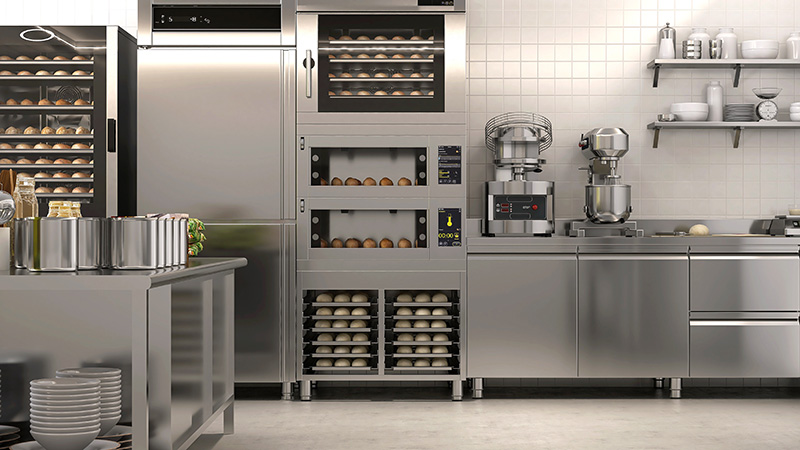
Running a commercial kitchen is one of the most demanding operations in the food industry. Every second matters, every movement counts, and every piece of equipment affects output and consistency. For this reason, many businesses rely on a trusted commercial kitchen equipment manufacturer to help them upgrade machinery, automate processes, and reduce production delays. Whether it’s a bakery, hotel, food factory, or restaurant chain, kitchen efficiency directly influences profitability, safety, and customer satisfaction.
Today, modern food machinery and intelligent systems are transforming how kitchens work. Tasks that once required multiple staff members can now be completed with greater accuracy and less time. As technology continues to advance, commercial kitchens are looking for innovative ways to streamline workflow, reduce manual labor, and ensure consistent product quality.
This guide explores practical strategies to improve efficiency, including layout planning, equipment selection, automation, energy management, and preventive maintenance. By applying these methods, any professional kitchen can achieve smoother operations and long-term performance.
Understanding What Makes a Kitchen Efficient
Efficiency is not only about speed—it’s about achieving maximum results with minimum waste. A highly efficient kitchen demonstrates:
Smooth workflow with minimal backtracking
Consistent production quality
Reduced downtime and machine failure
Organized and safe working conditions
Lower energy and resource consumption
Scalable capacity as demand increases
Even minor inefficiencies can create large disruptions in high-volume environments. Small improvements often lead to major long-term gains.
Key elements that influence efficiency:
✅ Workflow design
A smart layout allows staff to move logically from storage to preparation, processing, cooking, and packing.
✅ Better equipment reliability
High-quality machinery prevents interruptions and reduces repair frequency.
✅ Standardized procedures
Clear operating steps make training easier and output more consistent.
✅ Sanitation and safety
Clean, hazard-free spaces support speed and prevent contamination.
Tips for Reducing Workflow Bottlenecks
Bottlenecks are one of the most common causes of slow production. Eliminating them improves productivity and reduces staff stress.
✅ 1. Use a linear or zone-based layout
Movement should always flow forward.
Common layout types include:
Assembly-line for continuous production
Island setup for pastry or bakery teams
Zoned stations separating cold prep and hot cooking
This prevents overcrowding and confusion.
✅ 2. Automate repetitive processes
Automation improves speed and consistency.
Helpful applications:
Dough mixing and dividing
Depositing and filling
Proofing and baking
Cooling and conveyor transfer
Even partial automation reduces workload and boosts accuracy.
✅ 3. Standardize temperature and timing
Digital controls minimize human error.
Modern systems provide:
Uniform heat distribution
Programmable baking cycles
Automatic humidity and steam settings
This ensures identical results across every batch.
✅ 4. Improve storage and ingredient labeling
Organized inventory prevents delays and spoilage.
Best practices:
FIFO (first in, first out)
Color-coded containers
Clear storage mapping
Sealed bins for hygiene
Small changes can save significant time.
Benefits of Modern Food Machinery in Production
Advanced equipment is now essential for high-volume operations.
1. Faster production and throughput
Machines complete tasks more quickly without sacrificing quality.
Examples include:
Continuous mixers for large batches
Dough divider/rounders processing hundreds per hour
Conveyor ovens baking multiple trays evenly
Manual handling cannot achieve this level of speed and consistency.
2. Improved product uniformity
Customers expect reliable results.
Modern machinery stabilizes:
Temperature and hydration
Mixing duration
Shape and sizing
Ingredient dosing
This ensures every item meets the same standard.
3. Reduced labor strain
Heavy manual tasks contribute to injury and fatigue.
Automation helps:
Decrease physical stress
Improve workplace safety
Reduce manpower per shift
Staff can focus on supervision and quality control.
4. Lower operational costs
Long-term savings include reduced:
Repair expenses
Ingredient waste
Labor demands
Energy consumption
Smart equipment becomes cost-effective over time.
How Innovation Supports Food Safety and Hygiene
Food safety is now more regulated worldwide. Modern machinery is designed to meet hygiene standards without slowing production.
Key features include:
✅ Stainless steel frames
✅ Smooth, rounded edges
✅ Tool-free disassembly
✅ Sealed electrical components
✅ Automated cleaning options
These prevent contamination and allow faster sanitation routines.
Smart sensors now monitor:
Temperature fluctuations
Airflow inside ovens
Humidity levels
Ingredient accurac
Real-time tracking reduces risks and ensures compliance.
Choosing the Right Equipment for Your Kitchen
Every kitchen has different needs. Selecting machinery should be based on long-term goals, not just immediate demands.
Factors to consider:
✅ 1. Production volume
Choose equipment that supports current and future output.
✅ 2. Space and layout
Compact or modular systems maximize floor efficiency.
✅ 3. Energy efficiency
Energy-saving technology reduces operating costs.
✅ 4. After-sales support
Reliable servicing ensures uninterrupted production.
Partnering with an experienced supplier helps businesses avoid mismatched equipment and costly downtime.
Maintenance Tips to Extend Equipment Lifespan
Preventive care keeps machines running smoothly.
✅ Daily tasks
Wipe surfaces after each shift
Remove debris from moving parts
Check for abnormal sounds
✅ Weekly checks
Inspect belts and fasteners
Lubricate non-food contact parts
Verify thermostat accuracy
✅ Monthly servicing
Deep clean internal components
Replace worn seals or filters
Review software updates
A consistent schedule increases reliability and protects investment.
Future Trends in Commercial Kitchen Technology
The food industry continues to evolve rapidly.
Emerging innovations include:
🔹 Smart automation and robotics
Robotic arms reduce manual involvement.
🔹 Predictive maintenance
AI identifies issues before breakdowns occur.
🔹 Energy-efficient heating systems
Advanced designs lower fuel usage.
🔹 Multi-function modular equipment
One machine performs several tasks, saving space.
🔹 Eco-friendly manufacturing materials
More recyclable and sustainable components.
Businesses adopting these trends will remain competitive in the global market.
Conclusion
Improving commercial kitchen efficiency requires strategic planning, smart equipment selection, and consistent maintenance. With the right workflow, automation solutions, and safety measures, kitchens can increase productivity, reduce waste, and achieve reliable performance. Partnering with industry experts provides access to advanced technology and long-term operational support.
To explore innovative solutions and modern food machinery for professional production environments, visit mirabake.com for more insight into equipment options designed for global kitchen efficiency and future growth.